MarineroKnots › Reef knot

Free guide · no account

How to tie a reef knot

A reef knot — the square knot — binds two ends of the same line around something: left over right, then right over left. It lies flat, stays symmetrical and shakes out with one pull, which is why it ties off a reefed sail. It is a binding knot, not a bend: never use it to join two ropes that will take load.
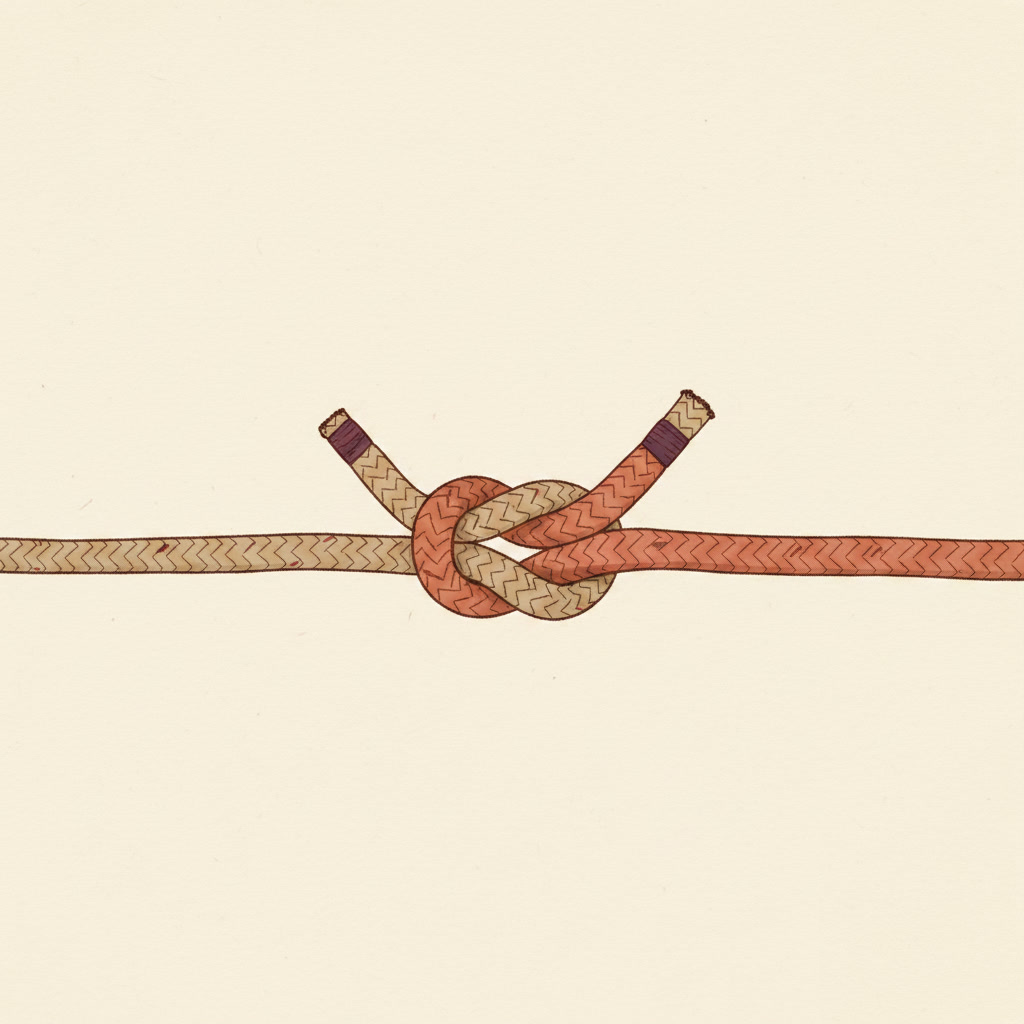
A finished reef knot
Type
Binding knot
Strength
Low — not for load-bearing joins
Ease to untie
Very easy — capsize it and pull
Best for
Reef points, sail ties, bundling a furled sail

“Left over right, right over left. Flat and square.”

Tie it step by step

  1. Cross left end over right and tuck it underThe first half knot. Note which end went on top — the second half must be the mirror of it.
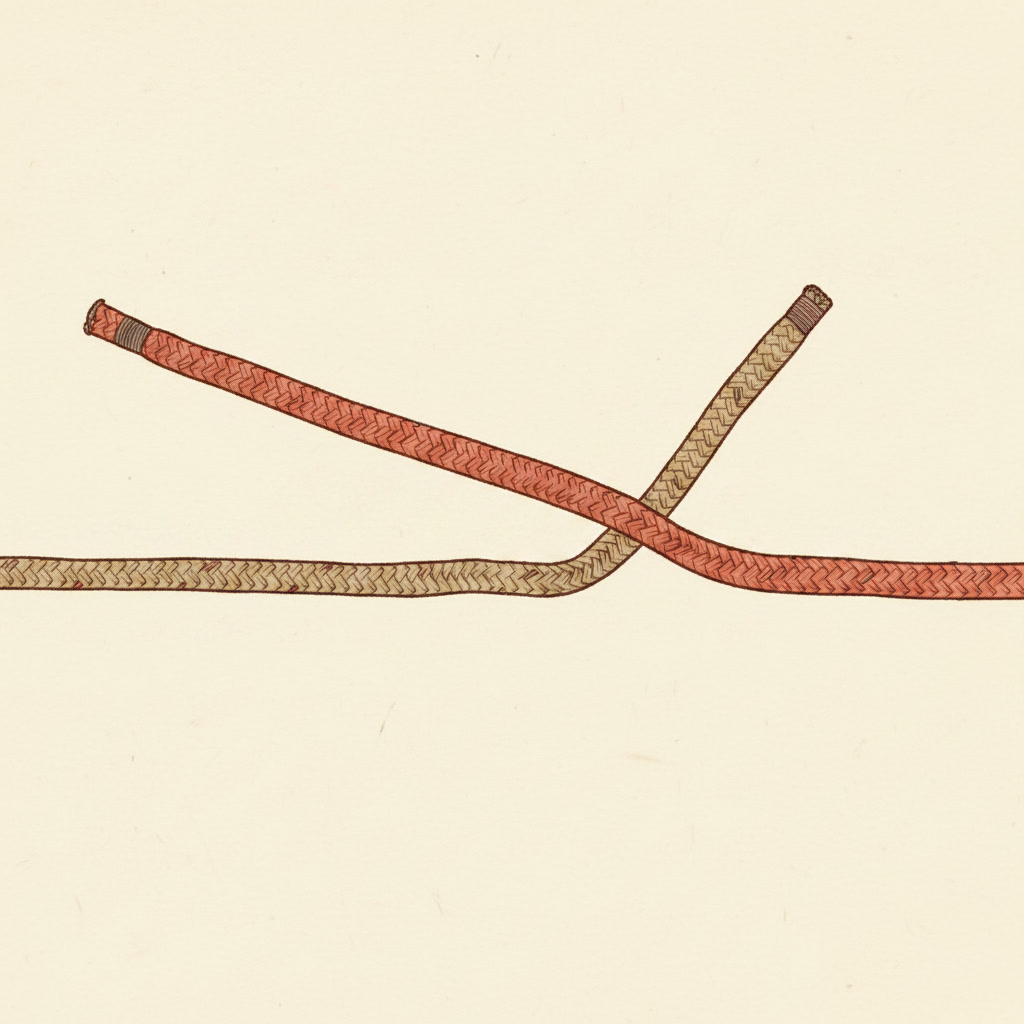
    Reef knot — cross left end over right and tuck it under
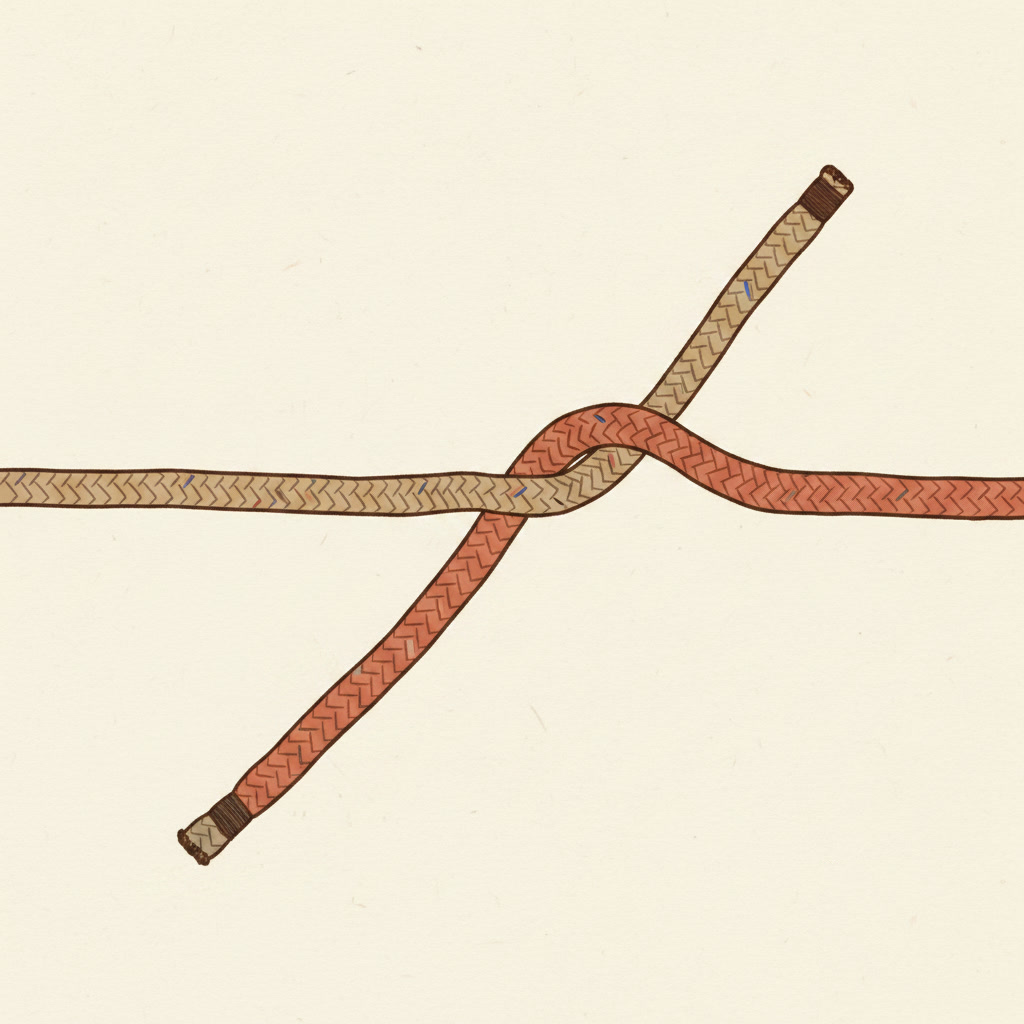
  2. Pull it snugYou now have a single half knot, sitting flat.
    Reef knot — pull it snug
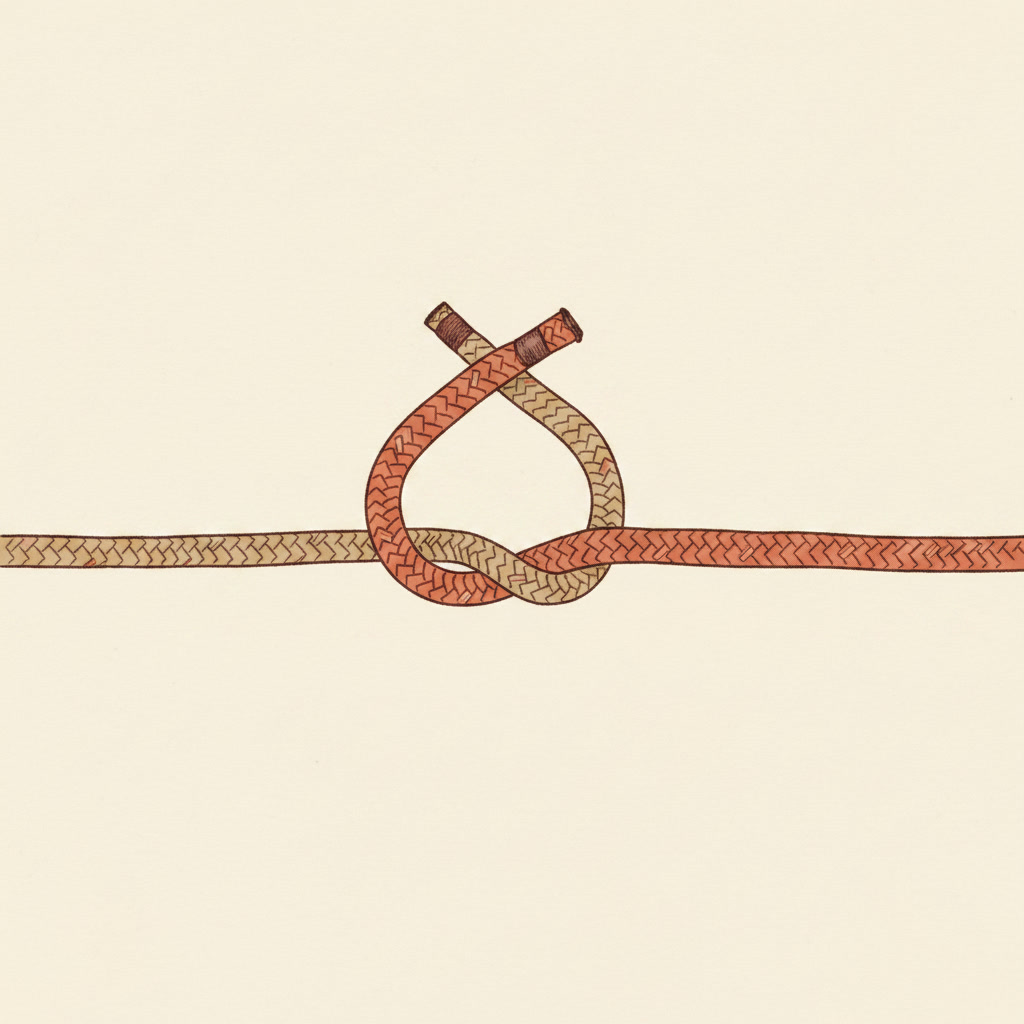
  3. Cross right over leftThe opposite of the first crossing. Get this backwards and you tie a granny knot, which slips.
    Reef knot — cross right over left
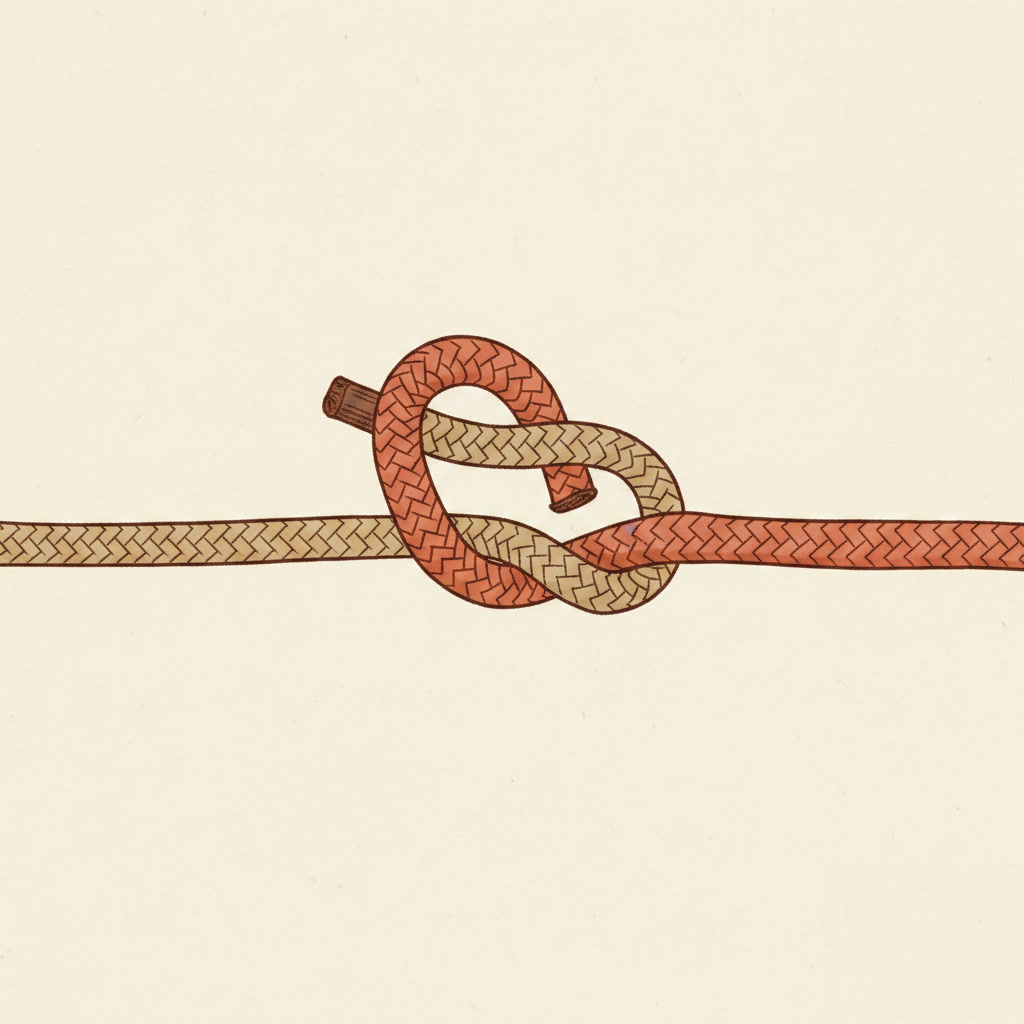
  4. Feed the end through the loopThe second half knot takes shape, still loose.
    Reef knot — feed the end through the loop
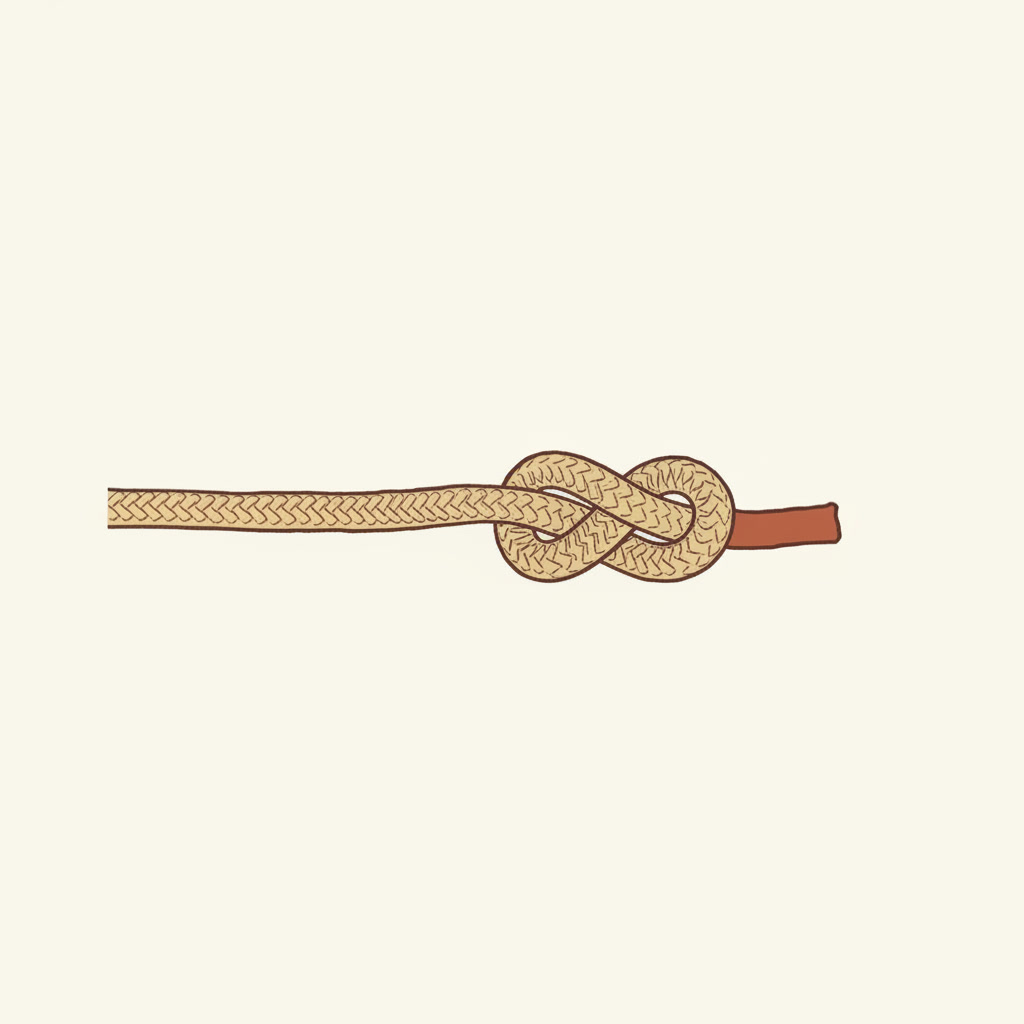
  5. Pull all four parts flat and squareBoth standing parts and both ends. It should look symmetrical — that is how you know it is a reef knot and not a granny.
    Reef knot — pull all four parts flat and square

When you will use it on a boat

Its name is its job: when you reef the mainsail, the reef pennants at the foot are tied off with reef knots. Flat, so they do not chafe against the sailcloth; symmetrical, so a tug on both ends shakes them out when the wind drops and you shake the reef back out — often in the dark, often in a hurry.

Also for sail ties around a furled main, a bundle of fenders, a bag of sheets. Anything you tie around something with both ends of the same line.

Watch out for

Do

  • Mirror the crossings: left over right, then right over left
  • Check the two loops lie parallel — a granny knot sits crossed
  • Pull all four parts to dress it flat against the sail

Don’t

  • Never to join two ropes — use a sheet bend or a double fisherman’s
  • Never on lines of different diameter or material
  • Never where it will be shaken while unloaded

Related knots

Questions people ask

Is a reef knot the same as a square knot?

Yes. Reef knot is the sailing name (it ties off a reef); square knot is the name used almost everywhere else. Same knot, same two mirrored half knots.

What is the difference between a reef knot and a granny knot?

A granny knot is what you get when both crossings go the same way. It sits crooked instead of flat and it slips under load. If your knot does not look neatly symmetrical, it is a granny — untie and start again.

Is a reef knot safe for joining two ropes?

No. It capsizes and spills under load, especially with different-sized ropes, and it has caused serious accidents. To join two lines use a sheet bend; for load-bearing joins, a double fisherman’s bend.

How do you untie a reef knot?

Capsize it: grab one end and its adjacent standing part and pull them apart. The knot flips into a lark’s head and slides straight off — which is exactly the behaviour you want when shaking out a reef.

Can you tie it from memory?

Reading a knot and tying it on a pitching foredeck are different skills. Test the first one in two minutes, then close the gap with the course.